Riders who commute year-round or tackle wet, gritty streets know the difference a waterproof geared hub motor wheel can make. It’s not just about keeping the rain out — it’s about translating motor power into usable torque, handling hills efficiently, and surviving the daily punishment of stop-and-go city riding.
A well-sealed, gear-reduced hub transfers power smoothly, climbs with less strain, and shrugs off harsh weather that can wear down lesser systems. Compared to direct-drive motors, geared hubs offer stronger low-speed performance, better acceleration, and improved efficiency in real-world commuting conditions.
This guide explores how geared hubs differ from direct-drive systems, why they excel on urban and hilly routes, and how modern waterproofing innovations protect internal components for long-term reliability.
For anyone considering a waterproof geared hub motor wheel for an all-weather eBike, understanding motor design, maintenance routines, and sealing technology is essential for lasting performance.
For technical insights, comparison charts, and maintenance best practices, View all.
How geared hub motors differ from direct-drive alternatives
Geared hub motors and direct-drive (DD) motors both place the power in the wheel, but they behave differently on the road.
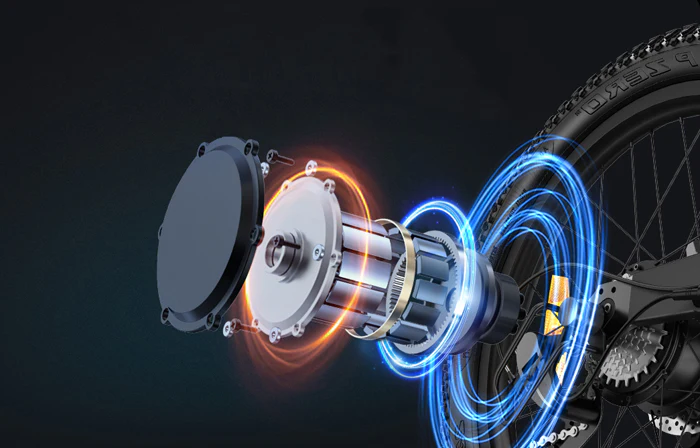
- Internal reduction: Geared hubs use planetary gear reduction, often around 4:1 to 5:1, to multiply torque at the wheel. That means a smaller, lighter motor can deliver punchy starts and confident climbing.
- Freewheel clutch: Most geared hubs include a one-way clutch that decouples the motor when coasting. There’s virtually no cogging drag, so the bike rolls freely without that magnetic “brake” feeling found on many direct-drive hubs.
- Weight and size: Geared hubs tend to be lighter and more compact than DD hubs of similar power, improving ride feel and making wheel handling easier for maintenance.
- Noise: Their planetary gears can introduce a soft whir, though modern helical-cut or polymer gears have made many models impressively quiet. Direct-drive hubs are nearly silent but heavier.
- Regenerative braking: Direct-drive systems often support regen, which can recapture a modest amount of energy (typically 5–10% depending on terrain and riding style). Most geared hubs don’t offer regen because the freewheel clutch prevents reverse torque transfer.
For riders who value hill-start torque, nimble handling, and low drag while coasting, geared hubs feel lively. Direct-drive hubs suit those who want absolute smoothness at speed, higher sustained power, and optional regen. In short: geared for torque and agility: direct-drive for simplicity and silent, high-speed cruising.
Performance advantages in hill climbing and stop-and-go riding
Urban riding is a test of torque at low speeds, not just top-end power. This is where geared hubs excel.
Hill Climbing
- Torque where it matters: Thanks to gear reduction, a 250–500 W geared hub can deliver wheel torque comparable to a bigger, heavier direct-drive motor. Many geared hubs output 35–60 Nm, plenty for neighborhood climbs and bridge ramps.
- Cooler starts: Getting a heavy bike moving draws high current. The gearset lets the motor spin faster (in its efficient range) while the wheel turns slower, reducing heat generation during those first pedal strokes up a hill.
- Better pedal feel: The assist comes on with more “push” from standstill, which reduces wobble and rider effort on steep starts at intersections.
Stop-and-Go Efficiency
- Quick launch, less wasted energy: In traffic, riders repeatedly pay the “acceleration tax.” Geared hubs convert motor RPM into usable thrust more efficiently at low speed, so less battery energy is burned just to get back up to 12–18 mph.
- Freewheeling advantage: When coasting into lights or over rough patches, the clutch reduces drag. That small efficiency gain adds up across a commute.
- Controlled traction: With a properly tuned controller, geared hubs deliver smooth, manageable torque that helps maintain grip on slick paint lines, wet cobbles, or dusted bike lanes.
For cargo and utility eBikes operating in dense city grids, the difference is tangible: fewer sweaty launches, steadier speed between lights, and less battery anxiety across the week.
Waterproofing measures that extend motor lifespan
A Waterproof Geared Hub Motor Wheel isn’t just about seals, it’s a system. True weather resilience comes from layered protection across the hub, connectors, and controls.
Common Protection Strategies
- IP-rated sealing: Many quality hubs target IP65 (dust-tight, protected against water jets). Some approach IP66/67 with deeper sealing, though full immersion ratings vary by model. Always treat IP ratings as a guide, not a diving license.
- Gaskets and O-rings: Endcaps, side covers, and cable pass-throughs typically use molded gaskets or O-rings to keep splashes out.
- Potting and conformal coatings: Critical electronics, Halls, phase lead terminations, or internal junctions, may be potted or conformally coated to resist moisture and vibration.
- Cable glands and heat-shrink: A proper cable gland with a compression seal, plus adhesive-lined heat-shrink and dielectric grease on connectors, prevents capillary ingress along the wiring.
- Bearing protection: Double-lip or labyrinth seals on bearings help block grit and spray, extending smooth operation.
- Pressure equalization: Some designs use breathable ePTFE vent membranes to equalize pressure, reducing the “pump” effect that can draw moisture past seals during temperature swings.
Real-World Do’s and Don’ts
- Do: Route a drip loop in the motor cable so water falls away from the connector.
- Do: Periodically inspect grommets and axle flats for nicks that could compromise sealing.
- Don’t: Pressure wash the hub or aim high-pressure jets at bearings and endcaps.
- Don’t: Submerge the wheel. Even IP67 hubs aren’t designed as underwater devices.
With these measures, a waterproof geared hub motor wheel can log thousands of wet-weather miles with minimal degradation, keeping magnets uncorroded, grease uncontaminated, and electronics happy.
Efficiency improvements for commuting and daily use
Efficiency isn’t one number: it shows up in range, thermal behavior, and how fresh someone feels stepping off the bike.
- Low-speed electrical efficiency: Geared hubs let the motor spin closer to its optimal RPM at city speeds, reducing I²R losses in the windings during starts and slow climbs. That translates into better Wh/mile for many urban profiles compared with similarly powered direct-drive hubs.
- Freewheel rolling: When not under power, coasting down a block, drafting a bus, or navigating crowds, the clutch eliminates cogging losses. Small, frequent savings accumulate over a week of commuting.
- Right-sized battery: Because geared hubs do more with less at low speeds, riders often get acceptable performance from a modest pack (e.g., 36–48 V, 10–14 Ah). That can reduce weight and cost without sacrificing daily practicality.
- Thermal headroom: Less heat at launch and on climbs means fewer thermal throttling events. The bike feels consistent on hot afternoons and during back-to-back errands.
- Drivetrain harmony: Unlike mid-drives, geared hubs don’t stress chains and cassettes with motor torque. Commuters get predictable wear cycles and fewer workshop visits.
For mixed routes, short hills, lights every few blocks, and varied traffic, a waterproof geared hub motor wheel is often the most energy-savvy choice. It sips power when others gulp.
Maintenance tips for geared hub motor systems
Geared hubs are relatively hands-off, but a little attention goes a long way, especially for all-weather riders.
Routine Checks (Monthly or Every 200–300 miles)
- Spoke tension: Wet pothole seasons are tough on wheels. Pluck-test for even tone or use a tension meter: re-true early to prevent rim fatigue.
- Axle hardware: Verify axle nut torque and the integrity of torque washers/arms. A slipping axle can damage dropouts and compromise sealing.
- Connectors: Clean and dry. Apply a thin layer of dielectric grease on mating surfaces. Ensure strain relief is intact and route a drip loop.
- Brake surfaces: Rim brakes need clean braking tracks: rotors should be free of oily film, especially after any connector greasing.
Periodic Service (Every 1,000–2,000 miles, or annually)
- Gearbox inspection: Many hubs are “lube for life,” but heavy, wet use benefits from a refresh. Use the manufacturer-recommended grease (often a synthetic, NLGI-2, water-resistant grease). Avoid overpacking.
- Seals and gaskets: Check for nicks or compression set. Replace if a cover has been off or if there’s evidence of ingress.
- Bearings: Spin test for roughness. Replace with equal or better sealed bearings if there’s play or noise.
- Controller and wiring: Look for chafing near the chainstay and at the exit of the hub cable. Secure with quality clips, not zip ties that bite.
Riding and Storage Habits
- After heavy rain: Wipe down the hub and cable entry. Store indoors to let any surface moisture evaporate.
- Cleaning: Use low-pressure rinse and mild detergent. Never blast bearings or cable glands.
- Firmware and limits: If the controller allows, set sensible current limits and soft-start to protect gears and reduce peak stress.
Follow these habits and the hub’s planetary gears, clutch, and bearings will remain quiet, efficient, and fuss-free for seasons of commuting.