
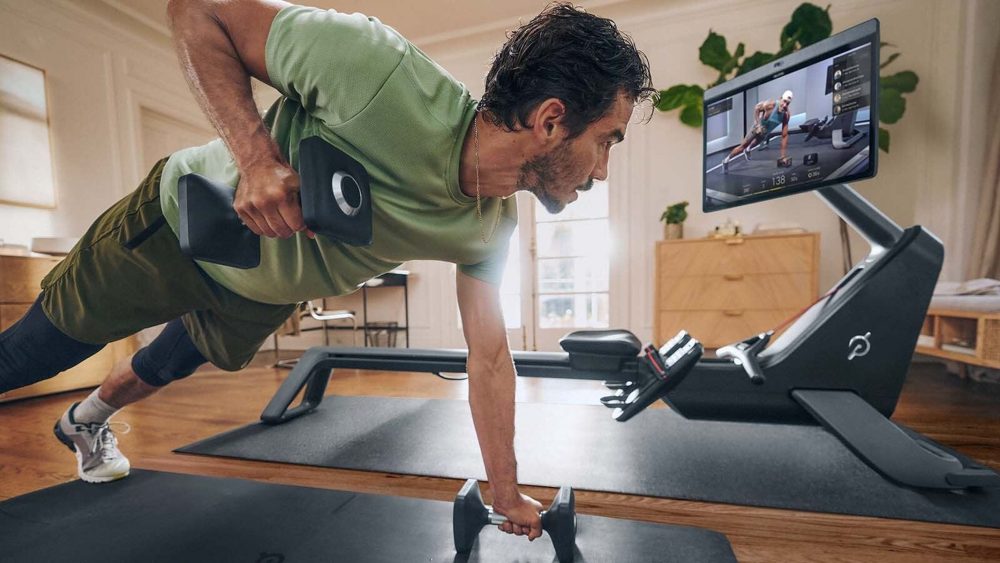
Singapore has built its national identity in part around technological leadership. The Smart Nation initiative, world-class digital infrastructure, and a population with among the highest rates of smartphone penetration and wearable device adoption in Asia have created a population uniquely positioned to benefit from the intersection of technology and personal health. For Singapore gym-goers, fitness technology has moved well beyond the novelty phase. At a well-equipped gym Singapore members train at today, technology is integrated into the experience at multiple levels, from how sessions are booked to how body composition is tracked, how performance data is collected, and how personal training is personalised. Understanding what is available and how to use it purposefully separates gym-goers who drift from those who progress consistently.
InBody Analysis: From the Scale to Real Data
The bathroom scale is one of the most misleading tools in fitness. It tells you your total mass but cannot distinguish between fat, muscle, water, and bone. A gym-goer who is losing fat and gaining muscle simultaneously may see no change on the scale while their body composition is improving significantly. Conversely, someone who is losing muscle through crash dieting may see the scale move favourably while their metabolic health deteriorates.
InBody analysis, available at established Singapore gyms, uses bioelectrical impedance analysis (BIA) to provide a detailed breakdown of body composition that a scale cannot offer. An InBody assessment takes approximately 60 seconds and produces a report including:
- Total skeletal muscle mass and segmental muscle distribution across the arms, trunk, and legs
- Body fat mass and body fat percentage
- Visceral fat level, which is the fat surrounding internal organs and a key metabolic health indicator
- Total body water including intracellular and extracellular fluid distribution
- Basal metabolic rate estimate based on lean mass
For Singapore gym-goers, the value of InBody analysis is in tracking change over time rather than interpreting a single reading in isolation. Repeating the assessment every four to eight weeks under consistent conditions, same time of day, same hydration state, creates a data record that reveals whether training and nutrition are producing the desired body composition changes regardless of what the scale shows.
Visceral fat tracking in particular is one of the most clinically relevant outputs for Singapore’s population given the city’s elevated rates of metabolic syndrome and type 2 diabetes. Visceral fat responds well to consistent exercise and dietary improvement, and InBody tracking makes this change visible in a way that external appearance often does not.
Wearable Technology: How Singapore Gym-Goers Are Training Smarter
Singapore’s wearable adoption rate is among the highest in Southeast Asia. Apple Watch, Garmin, Polar, Whoop, and Oura Ring are common sights in Singapore gyms, and the data these devices generate is increasingly being used purposefully rather than passively collected and ignored.
Heart rate monitoring The most fundamental use of wearable technology in training is heart rate monitoring during exercise. Training in specific heart rate zones determines the physiological adaptation the session produces. Zone 2 training, 60 to 70 percent of maximum heart rate, primarily develops aerobic base and fat oxidation capacity. Zone 4 and 5 training, 85 to 100 percent of maximum heart rate, targets cardiovascular capacity and VO2 max. Without heart rate data, intensity is a guess. With it, intensity becomes a training variable that can be precisely managed.
Heart Rate Variability (HRV) HRV is the variation in time intervals between successive heartbeats. It is a reliable indicator of autonomic nervous system balance and recovery status. When HRV is high, the parasympathetic nervous system is dominant, which correlates with good recovery and readiness for high-intensity training. When HRV is low, the sympathetic nervous system is dominant, often indicating accumulated fatigue, illness, or stress.
Singapore gym-goers using devices that track HRV, particularly Whoop and Garmin’s training readiness feature, can make data-informed decisions about when to push hard and when to back off or focus on recovery work. For Singapore’s overworked professional population, where distinguishing between productive training stress and counterproductive overreaching is genuinely challenging, HRV provides an objective signal that reduces guesswork.
Sleep tracking Sleep is where physical adaptation primarily occurs. Muscle protein synthesis, hormonal restoration, and neural consolidation of skill patterns all happen predominantly during deep and REM sleep stages. Singapore’s population consistently under-sleeps relative to requirements, and wearable sleep tracking makes this deficit visible rather than abstract.
Tracking sleep quality alongside training performance allows gym-goers to observe the direct relationship between sleep and session output, a connection that motivates better sleep hygiene in a way that general advice about sleep importance rarely does.
App-Based Class Booking and Training Consistency
One of the most practically impactful pieces of fitness technology for Singapore gym-goers is the ability to book group fitness classes through apps or digital platforms in advance. This might seem mundane compared to body composition scanners and HRV monitors, but the behavioural impact is significant.
Pre-booking a class creates a form of commitment that open gym access does not. When you have reserved a spot in a 7am cycling class that fills up, you face a specific social cost from not attending that simply visiting the gym floor does not replicate. Research on behaviour change consistently shows that implementation intentions, concrete plans about when, where, and how you will act, dramatically improve follow-through compared to vague intentions.
Singapore’s gym class booking platforms allow members to plan their training week in advance, set reminders, and receive notifications that support habit formation. For busy Singapore professionals whose schedules are disrupted constantly by meetings, travel, and work demands, having their training scheduled as firmly as a client meeting creates a structural commitment that casual gym intentions cannot replicate.
Technology in Personal Training: Data-Driven Coaching
Personal training in Singapore’s established gyms has become increasingly data-informed as trainers gain access to clients’ wearable data, InBody assessment histories, and digital training logs. This shift from intuition-based to data-informed coaching meaningfully improves programme quality.
A personal trainer who can review a client’s HRV trends, sleep quality, and training load data from the past four weeks has a far more complete picture of their client’s capacity and recovery status than one relying on verbal check-ins alone. This allows programme adjustments based on objective recovery data rather than estimates.
Progressive overload, the systematic increase of training stimulus over time that drives adaptation, is far more precisely managed when training volume, intensity, and performance metrics are logged digitally. Training apps used by Singapore gyms and personal trainers allow session-by-session tracking of sets, reps, loads, and performance notes, creating a searchable training history that informs programming decisions weeks and months into a client relationship.
For members without personal trainers, gym management apps that integrate with workout logging platforms provide self-directed access to the same structured tracking approach.
Artificial Intelligence in Singapore’s Fitness Industry
Artificial intelligence is beginning to influence fitness product and service design in Singapore, though its most sophisticated applications are still emerging rather than fully mainstream.
AI-powered training apps that generate personalised workout recommendations based on logged performance data, recovery metrics, and stated goals are increasingly available to Singapore consumers. These systems use machine learning to identify patterns in user data and adjust programme variables accordingly.
AI in equipment design is also advancing. Smart cardio equipment that adjusts resistance or pace based on real-time heart rate data, guiding the user to stay in a target training zone without manual adjustment, is available in Singapore’s premium gym segment.
Nutrition tracking platforms with AI-driven meal logging, including image recognition that identifies food items and estimates nutritional content from a photo, are highly relevant for Singapore’s food culture given the complexity of hawker dishes that do not appear in standard international food databases. Several platforms have developed Singapore-specific food databases that improve accuracy for local dishes.
Privacy and Data Protection for Fitness Technology Users in Singapore
Singapore’s Personal Data Protection Act (PDPA) governs how organisations collect, use, and store personal data, including health and fitness data generated by gym members and wearable device users. Singapore gym-goers who share biometric data through InBody assessments, app platforms, or wearable integration should be aware of their rights under the PDPA.
Key practical points for Singapore fitness technology users:
- You have the right to access personal data held about you by a gym or fitness app, and to request correction of inaccurate data
- Organisations collecting your health data must inform you of the purpose for which it is being used and obtain your consent
- Data should not be retained longer than necessary for the stated purpose
- You can withdraw consent for data collection, though this may affect access to data-dependent features
When evaluating fitness apps and gym platforms, reading the privacy policy for specifics on data sharing with third parties is a worthwhile step. Singapore’s regulatory environment provides reasonable protection, but informed data sharing decisions remain the individual’s responsibility.
TFX Singapore integrates technology meaningfully into the member experience through InBody analysis, digital class scheduling, and data-informed personal training, creating a training environment where decisions are guided by evidence rather than guesswork.
FAQ
Q: How accurate is InBody analysis compared to a DEXA scan for body composition?
A: DEXA (dual-energy X-ray absorptiometry) scanning remains the gold standard for body composition measurement and is more accurate than InBody BIA analysis for absolute values, particularly for bone density measurement. However, for the primary purpose most gym-goers need, tracking directional changes in muscle mass and body fat over time, InBody analysis is sufficiently accurate and significantly more practical. DEXA requires a medical facility, involves radiation exposure, and costs considerably more per assessment. InBody is available at the gym, takes 60 seconds, involves no radiation, and costs a fraction of DEXA. For trend tracking over weeks and months, InBody provides valuable and actionable data that serves the majority of Singapore gym-goers’ practical needs well.
Q: Does the order in which I wear my fitness tracker affect the data accuracy?
A: Most wrist-worn heart rate monitors are designed for the non-dominant wrist, which typically moves less during daily activity and provides a cleaner signal for resting heart rate and HRV measurements. During training, the accuracy of optical heart rate monitors varies by exercise type. Wrist-based heart rate tracking is less accurate during heavy resistance training with significant forearm and grip involvement, as the muscle contractions can interfere with the optical signal. For these sessions, a chest strap heart rate monitor provides significantly more accurate data. Many serious Singapore gym-goers use a chest strap during sessions and their wrist-based device primarily for daily HRV and sleep tracking.
Q: How should I interpret my HRV data as a Singapore gym-goer with a stressful job?
A: HRV interpretation is most meaningful relative to your own personal baseline rather than population averages. Your HRV is influenced by age, fitness level, and chronic stress in ways that make absolute values less informative than trends. Establish a baseline by recording your HRV daily for three to four weeks under consistent conditions, same time of day, immediately upon waking before getting out of bed. Significant drops below your established personal baseline, particularly sustained drops over several consecutive days, are the most reliable signal that recovery is compromised. For Singapore professionals with consistently high work stress, HRV baselines may be lower than population norms, and this is useful information about overall stress load rather than a limitation of the metric.
Q: Are Singapore’s food delivery and nutrition apps useful for tracking pre and post-workout nutrition?
A: Several nutrition tracking apps have made meaningful progress in Singapore food database accuracy, including Cronometer, MyFitnessPal, and local alternatives. However, accuracy for hawker dishes remains variable because the same dish prepared at different stalls has genuinely different nutritional composition depending on oil use, portion size, and specific ingredients. For precise calorie and macronutrient tracking, preparing meals with known ingredients and weights remains the most accurate method. For general nutritional awareness, these apps are useful even if the absolute numbers for local dishes are approximate. The greatest practical benefit is developing an intuitive understanding of the protein, carbohydrate, and fat content of common Singapore meals over time, which is more useful than obsessing over specific gram-level accuracy for any individual meal.
Q: Will fitness technology eventually replace personal trainers in Singapore gyms?
A: Technology will continue to augment what personal trainers can do, but the human elements of coaching are not replicable by current or near-future AI systems in meaningful ways. Motivation, real-time technique correction, accountability, and the relationship-based trust that makes coaching effective are all deeply human phenomena. What technology does is provide trainers with better data to inform programming decisions and allows members to stay connected to their progress between sessions. The trainers who thrive in Singapore’s evolving gym environment will be those who use technology as a tool to deepen the quality of the coaching relationship rather than viewing it as competition. For gym-goers, the optimal outcome is a trainer who understands both the human and data dimensions of your training, using technology to make the coaching smarter while maintaining the human connection that makes it sustainable.