
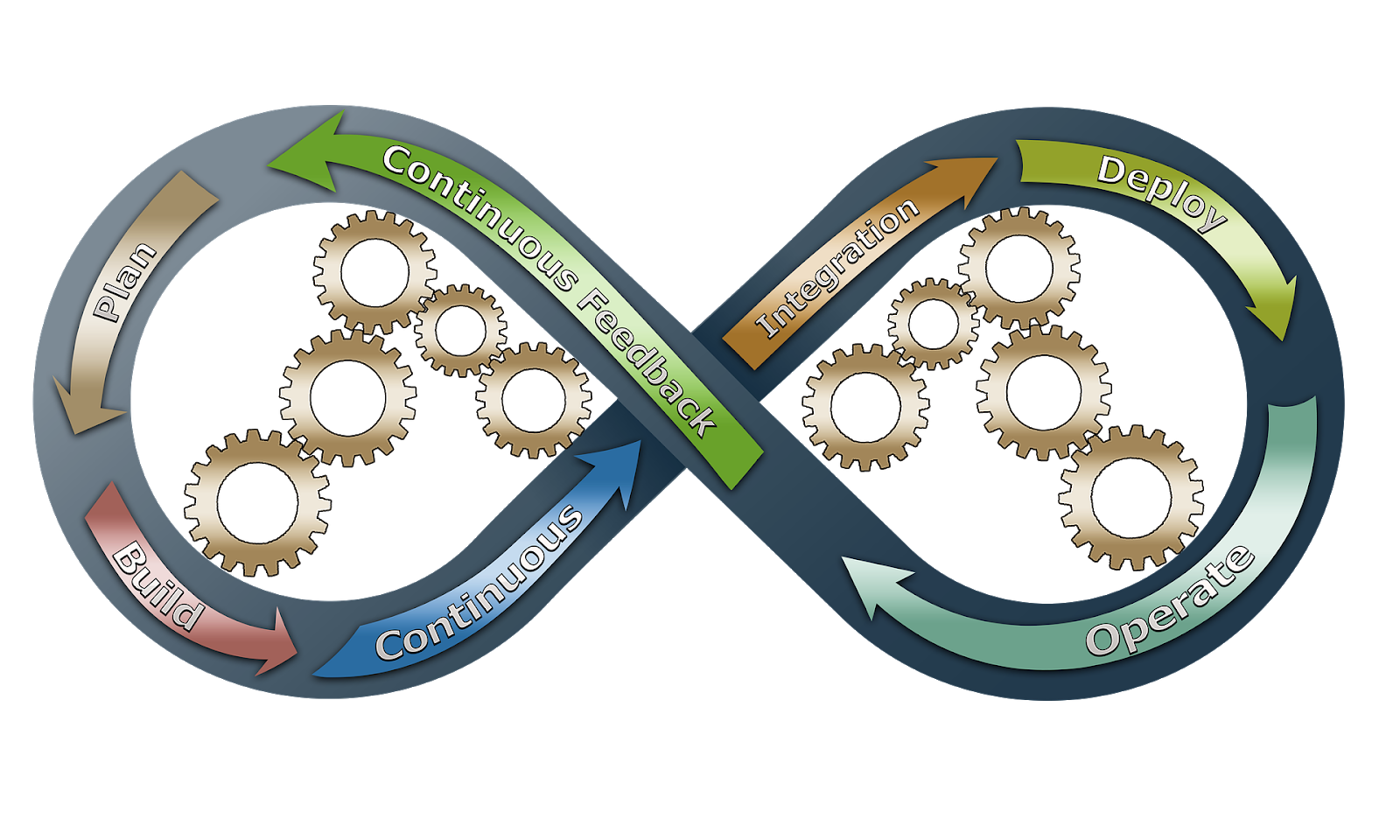
In the early days of software engineering, development teams worked in isolation for weeks or months at a time. Each engineer built their assigned features on localized branches, far removed from the work of their peers. When the time arrived to merge these disparate codebases into a single release, teams inevitably encountered an era of prolonged frustration known as merge hell. Conflicting code changes, broken dependencies, and hidden architectural bugs took days or weeks to unravel.
Continuous Integration (CI) emerged as a direct solution to this operational bottleneck. It is a software development practice where engineers merge their code changes into a central repository frequently, often multiple times a day. Each integration triggers an automated build and test sequence to verify the integrity of the new code. By shifting validation to the earliest stages of the development lifecycle, teams can identify and resolve defects rapidly, improve software quality, and dramatically accelerate release cycles.
Core Pillars of a Successful Continuous Integration Strategy
Implementing a continuous integration strategy requires more than installing a CI tool and writing a build script. It demands a cultural shift and adherence to fundamental technical engineering pillars.
A Single Source of Truth
Every successful CI strategy relies on a centralized version control system, such as Git. Every piece of code, configuration script, database schema migration, and environment variable blueprint must live within this repository. If a component is necessary to build, test, or run the application, it must be tracked by version control. This ensures that the automated CI environment exactly mirrors the parameters intended by the development team.
Automated Build Execution
The moment an engineer pushes code to the central repository, the CI server must automatically detect the change and initiate a build. A build compiles the source code, bundles assets, resolves external dependencies, and packages the application into an executable format. If the code fails to compile or contains syntax errors, the build fails immediately, notifying the developer before the corrupted code can impact anyone else.
Comprehensive Automated Testing
An automated build that compiles successfully proves that the code is syntactically correct, but it does not prove that the code functions correctly. A robust CI strategy incorporates a tiered testing pipeline that executes automatically during every build:
-
Unit Tests: These isolate and validate individual functions, methods, or classes. They execute in seconds and form the baseline foundation of the testing matrix.
-
Integration Tests: These verify that different modules, subsystems, or external service mockups interact correctly with one another.
-
Static Code Analysis: Tools inspect the codebase for security vulnerabilities, style violations, and code smell metrics without executing the application.
Technical Branching Strategies for Continuous Integration
The effectiveness of a CI pipeline depends heavily on how a development team organizes and manages its version control branches. Different architectural workflows offer distinct advantages depending on team size and project maturity.
Trunk-Based Development
Trunk-based development is the gold standard branching strategy for mature continuous integration. In this model, all developers commit their code directly to a single branch, usually called the main or trunk. Branches are either nonexistent or extremely short-lived, lasting no more than a few hours before being merged back into the trunk.
Because everyone works on the same branch, integration occurs constantly. Hidden merge conflicts are eliminated, and developers are forced to write highly modular code. To prevent unfinished features from breaking production, engineers rely on feature flags, which encapsulate new logic behind an intentional configuration switch that remains turned off until the feature is fully verified.
GitFlow Architecture
GitFlow is a more structured, traditional branching model that utilizes multiple long-lived branches for distinct purposes. The repository maintains a main branch for production-ready code and a develop branch for integration. Engineers create dedicated feature branches off the develop branch and work on them independently.
While GitFlow provides strict control over what code enters production, it presents challenges for true continuous integration. Because feature branches can live for days or weeks, the integration process is delayed, increasing the likelihood of significant merge conflicts when the feature branch is finally brought back to the develop branch.
Optimizing CI Pipelines for Speed and High Throughput
As a software project grows, the size of the codebase increases, the number of automated tests multiplies, and the CI build time naturally extends. A slow CI pipeline frustrates developers, stalls productivity, and defeats the primary purpose of rapid feedback loops. Optimizing pipeline throughput is essential.
Parallel Test Execution
Running hundreds of integration and unit tests sequentially is highly inefficient. Modern CI strategies utilize parallelization to split the testing suite across multiple isolated execution runners or containers simultaneously. For example, if a testing suite takes thirty minutes to run end-to-end, splitting the tests intelligently across six parallel containers can reduce the total execution time down to roughly five minutes.
Intelligent Caching Mechanisms
A significant portion of build time is often consumed by downloading external package dependencies, compiling standard libraries, and configuring runtime environments. By implementing a caching strategy within the CI runner framework, the pipeline can store these dependencies between runs. The system only invalidates and redownloads the cache when the underlying dependency configuration file is explicitly modified, saving valuable processing time on everyday commits.
Test Impact Analysis
Test impact analysis is an advanced optimization strategy where the CI system uses code coverage data to determine exactly which files were modified in a specific commit. Instead of executing the entire testing suite for a minor text edit, the CI server intelligently selects and executes only the specific unit and integration tests that are directly or indirectly impacted by the modified code paths.
Overcoming Cultural and Operational Barriers
The technical implementation of a continuous integration pipeline is only half the battle; the human and cultural elements are equally critical to preventing system breakdown.
The Broken Build Rule
A fundamental law of continuous integration states that the trunk branch must always remain in a stable, buildable state. If a developer pushes code that triggers a pipeline failure, fixing that build becomes the absolute highest priority for the entire team. No developer should merge additional code on top of a broken build, as doing so compounds the error and makes identifying the root cause of the initial failure significantly harder.
Frequent Commits
Continuous integration cannot function if developers write code locally for an entire week before pushing it to the server. Engineers must break down complex features into tiny, incremental milestones that can be committed and integrated multiple times a day. This practice ensures that the delta between the developer’s local workspace and the central repository remains microscopic, making conflict resolution trivial.
Frequently Asked Questions
What is the precise technical distinction between Continuous Integration and Continuous Delivery?
Continuous Integration focuses entirely on the early stages of the development cycle, specifically automated building, static analysis, and comprehensive verification testing every time code is committed. Continuous Delivery extends this process by automatically packaging the validated build artifact and staging it so that it is technically ready to be deployed to a production environment at any given moment with a manual, single-button approval.
How do feature flags assist in a continuous integration environment?
Feature flags allow developers to integrate unfinished code directly into the main branch without exposing incomplete features to end-users. By wrapping new logic inside a conditional statement driven by a remote configuration file, engineers can continually merge and test their code structural patterns within the live system while keeping the user-facing component safely hidden until it passes all operational criteria.
What are flaky tests and how do they impact a continuous integration pipeline?
A flaky test is an automated test that exhibits non-deterministic behavior, meaning it passes or fails intermittently on the exact same codebase without any structural changes to the underlying logic. Flaky tests are destructive to a CI strategy because they erode developer trust in the pipeline. When developers begin assuming that failures are just pipeline flukes rather than genuine bugs, critical defects slip into production unnoticed.
Why should static code analysis be placed early in the CI build sequence?
Static code analysis tools should run at the very beginning of the validation sequence because they do not require compiling or launching the full application framework. They can scan the raw text files for security flaws, styling deviations, and formatting errors within seconds. Catching these trivial issues early allows the pipeline to fail fast, saving compute resources that would otherwise be wasted on long-running integration tests.
How do you handle continuous integration for legacy monolithic applications that lack automated tests?
Transitioning a legacy monolith to a CI strategy requires a gradual approach known as the strangler pattern or incremental coverage. Teams should not halt development to write thousands of retroactive tests. Instead, they establish a baseline rule that any new code written or any bug fixed moving forward must be accompanied by corresponding automated tests, allowing coverage to expand organically over time.
What role do container technologies play in modern continuous integration strategies?
Container tools like Docker ensure environmental consistency across the entire pipeline. Instead of running tests directly on a fluctuating host server virtual machine, the CI pipeline initializes standardized containers defined by immutable configuration files. This guarantees that the code is built and tested inside an environment that is identical to the developer’s local machine and the final production servers, eliminating environmental discrepancies.