
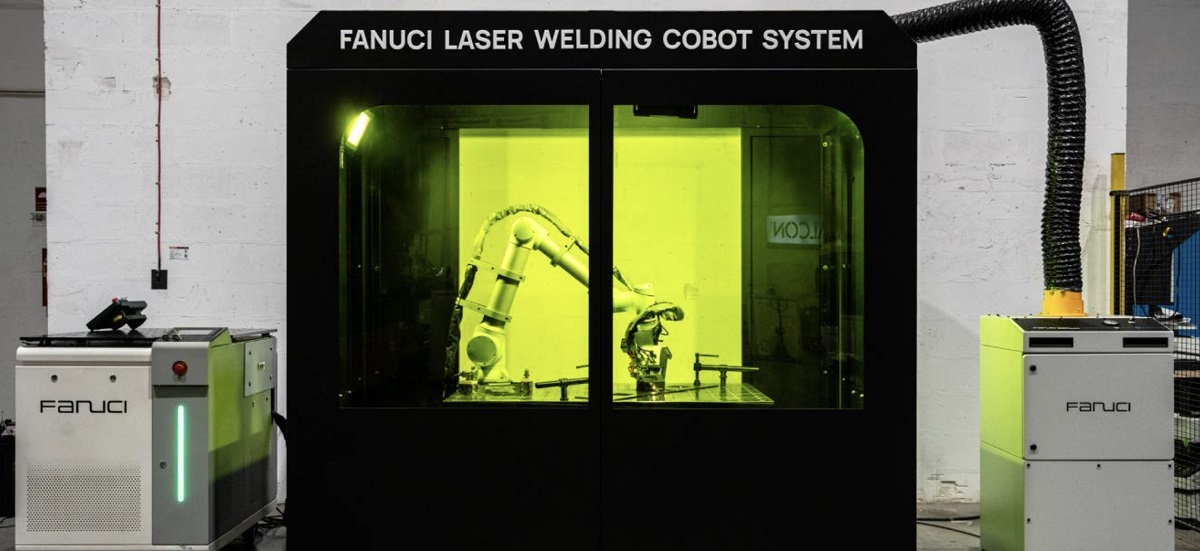
Robotic laser welding changes the way a manufacturing company plans work, quality, and operator involvement. Manual welding can still be useful when flexibility and direct human control are important, but industrial production often requires a more repeatable workflow. When a company compares both approaches, the question is not only how to join metal parts. The more practical question is how to organize the process so weld quality, speed, training, and daily operation remain predictable.
Why the Welding Method Matters in Production Planning
In production planning, welding affects more than the workstation itself. It influences the order of operations, operator workload, the amount of finishing needed after welding, and the risk of errors in repeated tasks.
A manual process may depend heavily on individual experience, while automation is designed to make the same operation easier to repeat. That difference becomes important when a company wants to stabilize output, reduce unnecessary corrections, and introduce a process that is easier to supervise.
Where Manual Welding Still Fits in a Manufacturing Company
Manual welding remains a natural choice when production is highly variable, when single parts require individual adjustment, or when a company is not yet ready to automate the process. It can also be useful for repairs, prototypes, and smaller jobs where full automation may be harder to justify.
In industrial planning, however, manual work should be assessed honestly. If similar parts return every day and the result depends too much on operator fatigue, availability, or individual skill, the process may need a more stable solution.
When Robotic Laser Welding Becomes the Better Production Option
Robotic laser welding becomes especially relevant when a company needs repeatability, cleaner welds, and a more organized production rhythm. A robotic workstation can support serial production because it performs the planned movement and welding process in a controlled way.
This does not remove the need for people, but it changes their role. Instead of relying only on manual skill for every weld, the company can focus more on preparation, process supervision, training, and consistent parameters.
How Automation Changes Operator Workload
The practical value of automation is often visible in the everyday organization of work. A robotic laser welding workstation can support a model in which one operator supervises the process instead of performing every weld manually.
For a manufacturing company, this may help reduce dependence on repetitive manual tasks and make daily planning easier. The benefit is not only speed. It is also the ability to organize work around a defined process, where the workstation supports consistency and limits avoidable variation.
Fanuci and Falcon as a Partner for Laser Welding Automation
Fanuci and Falcon provides laser metal processing solutions, consulting, implementation support, and service. In robotic welding, the company offers FANUCI 5.0 TurnKey, a workstation designed for automation, repeatability, process stability, simple control, and certified components.
The company also supports equipment selection through consultation, technology trials, configuration, training, and service. This matters because a robotic welding investment should fit the real part, the production goal, and the team that will operate the system.
What a Robotic Workstation Can Support in Serial Production
In serial production, one of the strongest arguments for robotic laser welding is the ability to repeat a defined welding process with less dependence on momentary manual variation. Depending on the material, part, and configuration, this can support stable quality, cleaner results, and less finishing work.
It can also help the production manager think in terms of workflow rather than isolated tasks. The workstation becomes part of a broader production plan, connected with preparation, loading, supervision, service access, and operator training.
How to Compare Risk Before Changing the Process
A company should not compare manual and robotic welding only by looking at the machine itself. A more useful comparison includes training, expected workload, part repeatability, available space, service support, and the way the process will be introduced.
Fanuci and Falcon supports this stage through consultation, testing, and configuration selection before purchase. This is a safer path than choosing equipment based only on general assumptions. The investment should answer a practical question: will this workstation make the real production process more stable?
Why Testing Should Come Before the Final Decision
Testing is important because welding results depend on the part, material, required appearance, and expected production rhythm. A presentation or technology trial can show how the solution performs in conditions closer to the buyer’s real work.
It also helps clarify what the operator will do, what training will be needed, and how the workstation should be configured. For companies moving from manual welding toward automation, this step reduces uncertainty and makes the decision easier to explain inside the organization.
How to Move from Manual Welding Toward Robotic Laser Welding
The best transition starts with the process, not with the machine. A company should identify repeated welding tasks, check where manual work creates errors or finishing costs, and define what a more stable workflow should achieve.
Then it can discuss the part, expected result, configuration, training, and service support with a technology partner. To explore a robotic workstation designed for this type of production planning, check the Fanuci and Falcon laser welding cobot system page.