

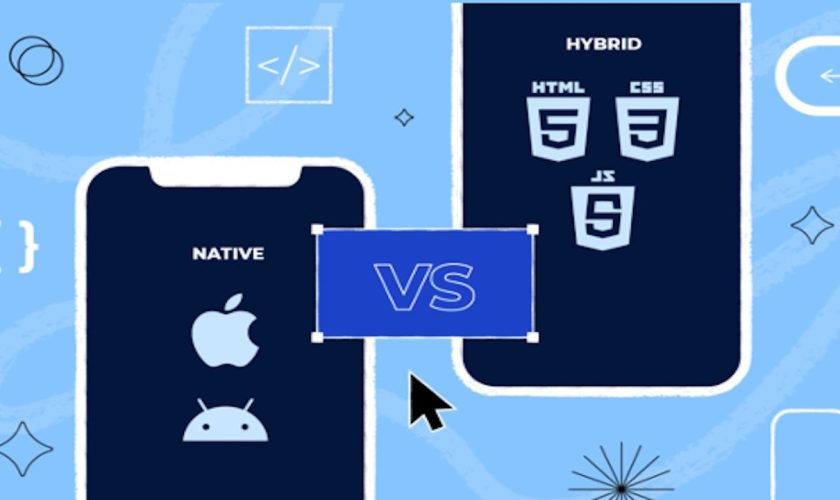
The mobile application marketplace is massive and highly competitive. For businesses, entrepreneurs, and engineering teams, launching a mobile app is no longer just an option to consider; it is often the primary touchpoint for customer engagement and revenue generation. However, before the first line of code is written or the initial wireframes are designed, a foundational technical decision must be made: should you build a native app or a hybrid app?
This choice is not merely a technical debate among developers. It has profound, long-term implications for your business model, development budget, time to market, and ultimate user experience. Choosing the wrong path can lead to wasted capital, sluggish performance, and fractured user reviews that kill an app before it gains traction. Understanding the structural, operational, and financial differences between native and hybrid frameworks is essential to making an informed decision that aligns with your strategic goals.
Understanding Native App Architecture
Native app development involves building a separate, standalone application for each specific mobile operating system. This means writing entirely independent codebases using the platform-authorized programming languages, software development kits (SDKs), and design environments provided by Apple and Google.
The Apple iOS Ecosystem
To build a native application for Apple devices, developers write code in Swift or Objective-C, using Xcode as their primary integrated development environment. The resulting application is tailormade to interact flawlessly with iOS architecture, animations, and security frameworks.
The Google Android Ecosystem
For Android devices, developers utilize Kotlin or Java within the Android Studio environment. The software is optimized to handle the vast array of Android device form factors, processors, and screen resolutions.
Advantages of Native Apps
-
Uncompromising Performance: Native applications are compiled directly into machine code. This allows them to leverage the full processing power of the smartphone, resulting in incredibly fluid animations, fast load times, and high frame rates required for graphics-heavy applications.
-
Deep Hardware Integration: Native apps have seamless, direct access to the built-in hardware of the device, including the camera, GPS module, microphone, bluetooth sensors, biometric authentication scanners, and gyroscopes without requiring complex translation layers.
-
Superior User Experience: Because native apps utilize the platform-specific user interface components, they match the look, feel, and navigation gestures that users expect from their respective operating systems. An iOS user gets an authentic iOS experience, while an Android user gets an authentic Android experience.
-
Robust Offline Capabilities: Native architectures excel at managing local data storage and background synchronization, allowing complex apps to remain highly functional even when the user is completely disconnected from the internet.
Decoding Hybrid App Architecture
Hybrid applications are essentially web applications wrapped inside a native container. Developers write the core application code once using standard web languages or specialized cross-platform frameworks, and then deploy that single codebase across both iOS and Android platforms.
Frameworks Driving Hybrid Evolution
Modern hybrid development relies on powerful cross-platform frameworks that bridge the gap between web technology and mobile hardware. These include React Native, Flutter, and Ionic. While older hybrid apps were simple web pages rendered inside a hidden mobile browser shell, modern frameworks allow web code to render native user interface components dynamically, significantly narrowing the performance gap.
Advantages of Hybrid Apps
-
Reduced Development Costs: Instead of hiring two separate teams to build an iOS app and an Android app, a single team can construct one hybrid codebase that serves both operating systems. This halves the initial engineering investment.
-
Accelerated Time to Market: Building a single codebase takes significantly less time than developing two independent software products. If you are racing against competitors to launch a Minimum Viable Product (MVP), a hybrid approach can cut your timeline down by months.
-
Simplified Maintenance and Updates: Bug fixes, feature updates, and layout changes only need to be coded once within the centralized repository. When the update is pushed, it applies to both platforms simultaneously, drastically reducing long-term maintenance overhead.
-
Unified Design Language: A hybrid model makes it easier to maintain absolute brand consistency across platforms, ensuring that the visual layout and user workflows remain identical whether accessed via an iPhone or an Android tablet.
Head-to-Head Comparison: The Decision Matrix
Choosing between native and hybrid is not about finding the objectively superior technology; it is about assessing which model fits your specific project parameters.
Budget and Resource Constraints
If your venture is a startup working with limited seed capital, or if you are an established business looking to test a new market concept with minimal financial exposure, hybrid development is highly compelling. It allows you to maximize your budget by reaching the entire mobile market simultaneously. Conversely, if capital is abundant and your brand reputation hinges entirely on delivering a premium, flawless digital product, investing in native development is the correct path.
Performance and Graphical Intensity
The nature of your app’s functionality should dictate its architecture. Applications that require intense real-time rendering, complex mathematical calculations, high-frequency audio/video processing, or continuous GPS tracking, such as mobile games, advanced photo editors, or navigation tools, demand native architecture. Hybrid frameworks introduce a layer of interpretation between the app and the hardware, which can cause micro-stutters, battery drain, and overheating under intense processing loads. If your app is primarily focused on presenting text, displaying images, managing user inputs, and conducting standard e-commerce transactions, a hybrid framework will perform beautifully.
Long-Term Scalability and Security
Native applications offer superior long-term stability because they depend directly on Apple and Google. When a new version of iOS or Android is released, native developers get instant access to the new features and security patches. Hybrid applications are dependent on a third-party framework layer. If Apple updates an underlying security protocol, hybrid developers must wait for the creators of React Native or Flutter to update their frameworks before they can patch their applications, creating a potential vulnerability window.
Strategic Recommendations
Opt for native development if your application requires heavy reliance on device hardware, depends on sub-millisecond execution speeds, operates extensively offline, or targets an audience that demands a highly customized, ultra-premium user experience.
Choose hybrid development if your project is timeline-sensitive, operates on a modest budget, functions primarily as a content delivery platform, or needs to prove its market viability across both operating systems as quickly as possible.
Frequently Asked Questions
What is a Progressive Web App and how does it differ from a hybrid app?
A Progressive Web App (PWA) is a highly optimized website designed to look and function like a mobile app directly inside a mobile browser. Unlike hybrid apps, PWAs do not require downloading from the Apple App Store or Google Play Store. Users simply visit the website and add a shortcut to their home screen. While PWAs offer basic offline access and push notifications, they have even tighter restrictions on hardware integration and performance than hybrid applications.
Can a business start with a hybrid app and migrate to native later?
Yes, many highly successful companies begin with a hybrid application to rapidly validate their product-market fit, discover user pain points, and secure funding. Once the business model is proven and capital is available, they rewrite the application natively from scratch to optimize performance, eliminate structural technical debt, and introduce advanced features that the initial hybrid framework could not support.
Do hybrid applications face higher rejection rates in the Apple App Store?
Historically, Apple has maintained strict guidelines regarding app quality. In the early days of hybrid development, apps that were simply clunky, slow-loading websites wrapped in a basic mobile container were frequently rejected for lacking native utility. However, modern cross-platform frameworks like Flutter and React Native produce highly responsive, visually polished applications that comply fully with App Store guidelines, provided the design follows standard human interface practices.
How does the size of the final application file differ between native and hybrid models?
Native applications generally feature much smaller initial download sizes because they compile directly into lean, optimized machine code and utilize components that already exist natively within the operating system. Hybrid applications require packaging additional libraries, dependencies, and framework translation engines inside the application bundle, which naturally inflates the final file size on the user’s phone.
How do native and hybrid applications handle background processing tasks?
Native applications have a distinct advantage when managing complex background tasks, such as continuous location tracking, large file downloads, or real-time data syncs while the device screen is locked. iOS and Android have unique, strict resource management policies for background apps. Native development allows engineers to tailor the code precisely to these OS-specific battery and memory-saving rules, whereas hybrid frameworks often struggle with background execution constraints.
Which approach makes it easier to implement customized animations and complex UI designs?
Native development is vastly superior for implementing intricate, customized animations and unique interface designs. Because native code talks directly to the graphic rendering engines of the device without any middleware interference, UI designers can build complex, fluid, and layered visual effects without worrying about dropping frame rates or stuttering, which can easily occur when trying to force a hybrid framework to render non-standard visuals.