In 2025, onsite nitrogen generation has shifted from a nice-to-have to a strategic utility across food and beverage, pharmaceuticals, electronics, metal fabrication, chemical processing, and labs. This Nitrogen Generator Buyers Guide for Industrial Applications in 2025 helps teams cut through the noise and confidently specify systems that hit purity targets, protect uptime, and lower total cost. The best choice hinges on more than headline flow rates, it’s about how purity, duty cycle, ambient conditions, and future expansion plans intersect with energy use and maintenance. They’ll find that the right configuration, coupled with smart controls and proper pretreatment, can deliver reliable nitrogen at a fraction of delivered-gas costs while advancing safety and sustainability goals.
Key Types of Nitrogen Generators Available in 2025
Three core technologies dominate onsite nitrogen generation, each excelling in different purity and flow ranges. Understanding their capabilities helps industries choose the right balance between cost, performance, and reliability.
Pressure Swing Adsorption (PSA)
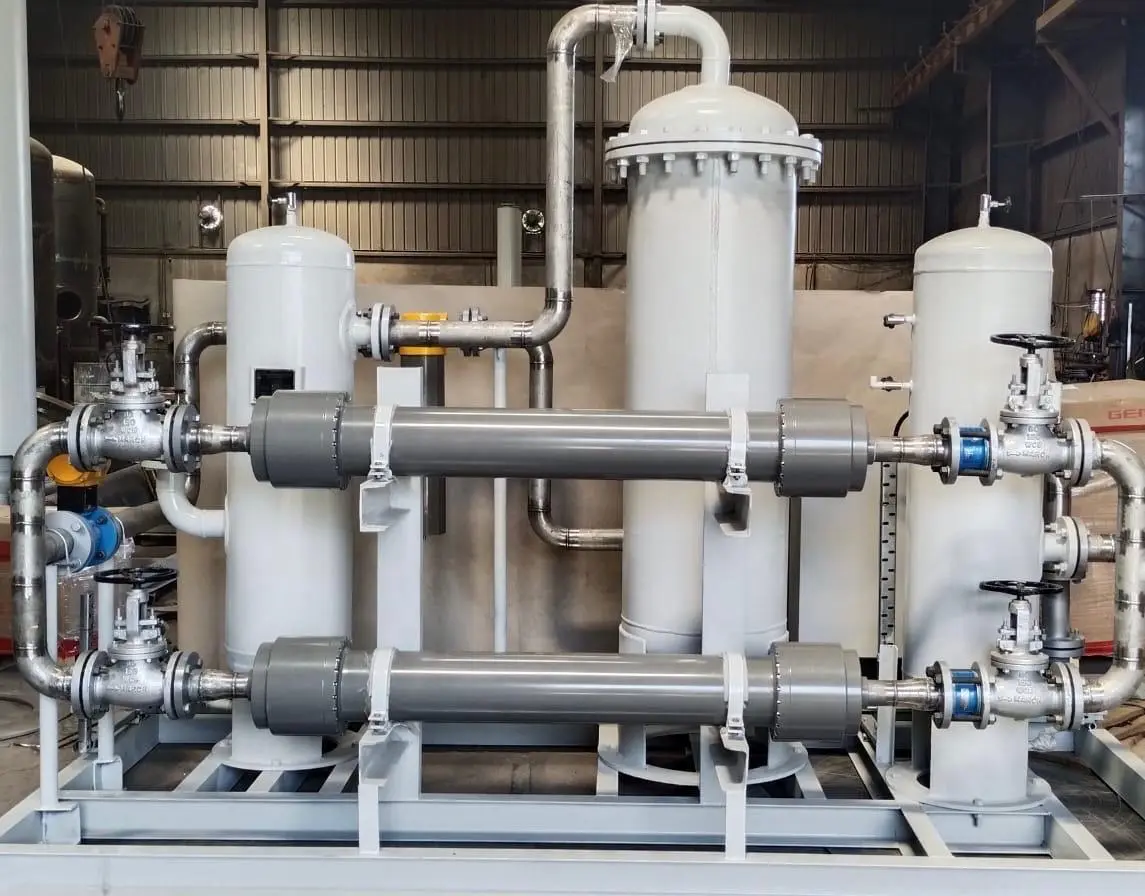
PSA nitrogen generators use carbon molecular sieve (CMS) to adsorb oxygen and trace gases, producing high-purity nitrogen through alternating adsorption beds.
In 2025, advancements in CMS materials, faster cycling valves, and intelligent PLC controls make PSA systems the most versatile option—delivering 95% to 99.999% purity and flow rates from tens to thousands of Nm³/h.
Typical applications include:
- Food packaging: 99–99.9% purity
- Pharmaceuticals: 99.5–99.999% purity
- Electronics and laser cutting: ultra-high purity nitrogen
PSA skids are modular, scalable, and maintain stable purity under varying demand—especially when paired with well-sized buffer storage tanks.
Membrane Separation
Hollow-fiber membrane systems separate gases based on permeation speed: oxygen molecules pass through the membrane faster, while nitrogen remains in the main stream.
Membranes excel at 95–99.5% purity levels with steady, moderate-to-high flows. They offer:
- Quick startup and shutdown
- Compact design with minimal maintenance
- No moving parts for high reliability
These systems are ideal for oil and gas inerting, marine operations, tire inflation, and food preservation where 98–99% purity suffices. However, as purity targets climb above ~99%, energy consumption increases sharply, making membranes less efficient for ultra-high purity needs.
Cryogenic (Small Onsite ASU)
Compact cryogenic air separation units (ASUs) liquefy and distill air to produce high-flow nitrogen at 99.999% purity, with the added flexibility of supplying liquid nitrogen.
Although cryogenic systems involve higher upfront costs and greater complexity, they deliver significant long-term savings for large-scale users or those requiring liquid backup. Modern packaged ASUs are increasingly competitive against bulk nitrogen deliveries, especially for continuous, high-demand operations.
Hybrid and Packaged Solutions
Some facilities now deploy hybrid nitrogen systems—using membranes to meet base-load demand and PSA polishing for higher purity peaks. Others integrate high-pressure boosters for specialized applications like laser cutting or pharmaceutical manufacturing.
By 2025, turnkey nitrogen generation packages often include:
- Air compressors and dryers
- Filtration and gas storage
- Centralized PLC control and monitoring
These integrated systems streamline installation, reduce maintenance coordination, and provide a single-vendor solution for complete reliability.
For expert guidance on selecting the right nitrogen generator for your application, visit https://pneutech.com/ — your trusted partner in precision gas generation, compressed air solutions, and industrial efficiency.
Selection criteria based on industry requirements
Choosing a nitrogen generator starts with how the plant uses nitrogen, purity, flow, pressure, and risk profile vary widely.
- Food & Beverage (MAP, blanketing): Typically 99–99.9% purity, oil‑free air, hygienic design, HACCP alignment, and oxygen analyzers with data logging. PSA is common: membranes work for lower purity or inerting.
- Pharmaceuticals & Biotech: 99.5–99.999% purity, validated performance, material traceability, and monitored critical parameters. Look for GMP-friendly documentation, alarms, and electronic records (e.g., audit trails) to support QA.
- Electronics/SMT & Additive Manufacturing: Low oxygen ppm (down to 10 ppm), very dry gas (low dew point), ESD-safe materials, and stable pressure. PSA with polishing and high-precision analyzers is typical.
- Metal Fabrication & Laser Cutting: High flow and pressure (often 30–40 bar) at 99.95%+ for clean cuts. Systems may integrate boosters, high-pressure storage, and fast-recovery controls to handle surge demand.
- Chemicals, Oil & Gas: Inerting and purging at 95–99.9% purity, often outdoors or offshore. Membranes are attractive for robustness and footprint: PSA used when higher purity is required.
- Laboratories & R&D: Lower flows with high purity and quiet operation: compact PSA or membrane cabinets with built-in compressors are common.
Key parameters to define before comparing models:
- Purity: Expressed as % N2 or oxygen ppm: higher purity reduces available flow and raises energy use.
- Flow: Peak, average, and turndown needs in Nm³/h or SCFH: include surge factors.
- Pressure: Delivery and storage pressures: consider boosters for cutting or long distribution runs.
- Air Quality: Pretreatment to ISO 8573-1 class suitable for the generator and end use: oil-free air may be mandated.
- Environment: Ambient temperature, dust/salt exposure, and indoor vs. outdoor installation.
- Compliance: Industry standards (e.g., FDA/USP expectations, HACCP, ATEX/HAZLOC where applicable).
Efficiency factors influencing generator performance
Operating cost is largely electricity. The following elements move the needle on kWh per unit of nitrogen produced:
- Specific Energy Consumption (SEC): Compare vendors in kWh/Nm³ or kWh/100 SCF at the same purity and pressure. Small purity bumps can add significant energy.
- Compressor Strategy: Variable speed drive (VSD) compressors and correctly sized dryers/filters prevent overcompression and wasted purge. Oil-free vs. oil-injected choices affect maintenance and risk of contamination.
- Pressure Drop and Piping: Poor layouts force higher compressor setpoints. Right-size headers, minimize bends, and keep filters clean to maintain low ΔP.
- Purge and Cycle Optimization (PSA): Modern controllers use oxygen feedback and adaptive timing to reduce purge losses during low demand.
- Membrane Operating Temperature: Membranes deliver more flow when warm but can drift in purity: stable conditions and good pretreatment preserve performance.
- Air Treatment and Dew Point: Desiccant dryers deliver low dew points essential for high purities: heat-of-compression or heat-regenerated designs can lower energy vs. traditional heated purge.
- Turndown and Standby Modes: Smart systems scale air production with demand or enter eco-standby without purity decay.
A quick rule: match generator capacity to real load profiles, not just nameplate peak. Right-sizing plus controls often saves double-digit energy percentages.
Cost considerations driving equipment decisions
Budgeting should consider the full picture, capital, installation, and years of operating expense.
- CAPEX: Generator skid(s), compressors, dryers, filtration, analyzers, storage, boosters, and installation (foundations, electrical, ventilation). Cryogenic packages have higher CAPEX but can be economical at very large scales.
- OPEX: Electricity dominates. Add filter elements, CMS replacement (8–15 years typical), membrane bundles (5–10 years), compressor service, and analyzer calibrations. Plan for spare parts kits to reduce downtime.
- Cost of Nitrogen vs. Delivered Supply: Onsite generation commonly lands in the range of low cents per Nm³ (or per 100 SCF) depending on power rates and purity, while bulk liquid pricing swings with market and logistics. Many plants see payback in 1–3 years, but verify with a site-specific model that includes your kWh cost and duty cycle.
- Redundancy and Risk: N+1 beds, dual compressors, and backup liquid cylinders add cost but protect high-value production lines. Quantify the cost of downtime to justify resilience.
- Space and Infrastructure: Footprint, noise, heat rejection, and ventilation can add hidden cost. Outdoor-rated enclosures may simplify indoor space constraints.
- Financing Options: Purchase, lease, or performance contracts tied to guaranteed purity/flow. In some regions, energy incentives support high-efficiency compressors and heat recovery.
A simple heuristic: if annual nitrogen spend on delivered gas is high and demand is steady, onsite generation often wins on total cost within a few budget cycles.
Importance of system scalability for future growth
Demand rarely stays flat. A smart 2025 design anticipates tomorrow’s flows, purities, and shifts in product mix.
- Modular Skids: Choose PSA frames that accept additional adsorber beds or parallel membrane banks for stepwise expansion.
- Storage Strategy: Buffer tanks and high-pressure cylinders smooth peaks so base equipment can be sized closer to average load.
- Purity/Flow Flexibility: Ensure controls allow quick setpoint changes: higher purity reduces flow, so plan capacity headroom if purities may rise.
- Upgradable Utilities: Leave electrical, cooling, and plinth space for extra compressors or boosters.
- Digital Roadmap: Remote monitoring, trend data, and firmware updates make scaling and remote support faster and safer.
Designing with 20–30% future capacity in mind often avoids costly rework and production disruption later.
Maintenance and reliability as purchasing priorities
Reliability protects product quality and schedules. In evaluation, they should probe beyond a brochure’s uptime claims.
- Air Quality First: Most issues trace to inadequate pretreatment. Specify filtration stages (particulate, coalescing, carbon as needed) and a dryer that reliably meets dew point targets under worst-case humidity.
- Service Intervals and Access: Skids with front-facing filters, quick-release valves, and clearances reduce service time. Ask for a maintenance matrix with parts lists and typical hours.
- Consumables and Media Life: CMS life is commonly 8–15 years with clean, dry air: membranes 5–10 years. Confirm replacement cost and changeout procedure.
- Instrumentation: Redundant oxygen analyzers on critical lines, pressure and dew point transmitters, and event logging help catch drift before it hits product.
- Warranties and SLAs: Look for performance guarantees (purity, flow, pressure) and response times. Local service coverage and stocked spares matter more than glossy specs.
- Redundancy and Bypass: N+1 beds, dual compressors, and hard-piped bypasses enable maintenance without halting production.
A brief commissioning plan, air audits, leak checks, analyzer calibration, and operator training, often pays for itself within weeks.